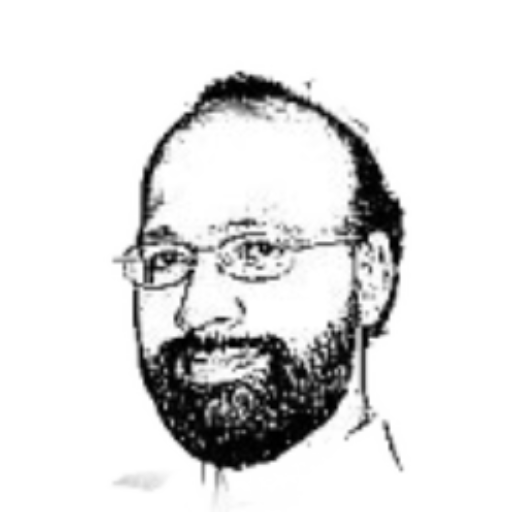
On this day, as we celebrate the birth anniversary of Sir M. Visvesvaraya, I find myself reflecting not on the grandeur of his public works alone, but on the quiet ways his life has shaped mine. Some of these lessons I sought deliberately. Others arrived unannounced, taking root in me through family influences, teachers, mentors, and choices that carried his echo.
My first real encounter with him was in grade six. I had built a small model of a periscope for a school competition, and to my surprise, I won a prize at the Visvesvaraya Industrial and Technological Museum. Along with it came a letter of appreciation and a copy of his Memoirs of My Working Life. That gift felt simple at the time, but it quietly redirected my life. Until then, I thought it noble to become a doctor, a dream reinforced by my family’s expectations. But holding his memoir in my hands, reading the story of an engineer who reshaped rivers and economies, I began to see another truth: that engineering, too, could save lives, not one at a time but at a scale that could transform societies. From then on, I longed to study at UVCE, the very college he had helped shape. As fate—or perhaps his quiet blessing—would have it, that dream came true.
Certain lessons of his flowed naturally into my journey. His refusal to accept royalties for his patented sluice gates at Khadakvasla taught me early that innovation is at its best when it serves the larger good. I carried that lesson into my own ventures. When I stood at a crossroads between pursuing purely commercial paths or building something with lasting societal impact, I often recalled his choice. It shaped the way I measured success—not in how much I gained, but in how much good was left behind.
Discipline was another thread. Sir MV’s days were measured to the minute, his routines orderly, his expectations of punctuality absolute. I saw a reflection of that same discipline in my mother, who managed her role as a professional and as the backbone of our family. She would leave for work precisely at the same time each morning after ensuring everything at home was in place, and return precisely at the same time in the evening—never dragging the day or her work. I remember my school teacher too, a stern man who demanded we arrive before the bell and taught us that time wasted was respect denied. When I later read how Sir MV lived by the clock, it felt like the pieces connected—the same truth shining through different people in my life. Over time, that became my instinct too: preparing my books neatly the night before as a student, arriving early for meetings as a professional, never tolerating sloppiness in my own routines.
Then there was his will, which made provisions not for prestige or family wealth but for those who had worked alongside him—his cook, gardener, staff. That touched me deeply. It reminded me of my grandfather, who treated farm workers with dignity, making sure they ate before he did, and never letting them feel small. Later in life, as I built teams, I carried that instinct forward. I found myself noticing those whose contributions might otherwise be invisible, making sure credit and care flowed where it was due.
Sir MV’s belief in “thinking in figures,” urging villages to keep records of land and yield, echoed again in my student days. At UVCE, one of my professors often asked us not only for solutions but for the calculations behind them. “Vision without numbers is only imagination,” he would say. That voice, along with Sir MV’s conviction, stayed with me. In my early entrepreneurial years, I tracked not just ideas but outcomes—revenues, timelines, impact. Numbers became a way not to reduce life but to clarify it.
And then there was endurance. The Krishna Raja Sagara dam and the industries he built were not created for applause, but for generations. I first understood that lesson fully when I founded my design lab. Many peers rushed toward flashy products and quick market wins. But I found myself drawn to building systems and intellectual property that would last, that could evolve and keep serving even after I moved on. In hindsight, that mindset was seeded by Sir MV, whose legacy showed me that true builders don’t chase headlines; they build foundations.
When I trace these strands—service, discipline, fairness, clarity, endurance—I see how they were reinforced at different stages of my life by the people around me. My mother’s quiet order, my teacher’s stern punctuality, my grandfather’s fairness, my professor’s insistence on measurement, my mentor’s voice reminding me to think beyond profit—all were reflections of principles that Sir MV had lived by. His life gave shape to what I admired in them, and together they shaped me.
What strikes me most is that this shaping was never loud. It arrived quietly, like a shadow walking beside me. Consciously, I admired him. Inherently, I absorbed him. That is the real gift of role models—they show up unannounced, and if we are willing to let them in, they stay with us for life.
They arrive without calling our name,
yet their footsteps guide our way.
Through their choices, we learn to choose,
through their silences, we find our voice.
They gift us discipline, kindness, and sight,
not in lectures but in the lives they live.
And when we carry them within us,
we too become a lamp for someone else.
Discover more from Hebbar's blog
Subscribe to get the latest posts sent to your email.